
Wednesday, October 7, 2026 marked three years since Hamas’s horrific slaughter in southern Israel, during which thousands of armed genocidaires systematically murdered, raped, and kidnapped their way across civilian communities in the Jewish state.
For those with the moral clarity to recognize evil and the necessity of defeating it, October 7 was a day of solemn remembrance for the victims. For the morally confused, however, it was a day to be commemorated triumphally.
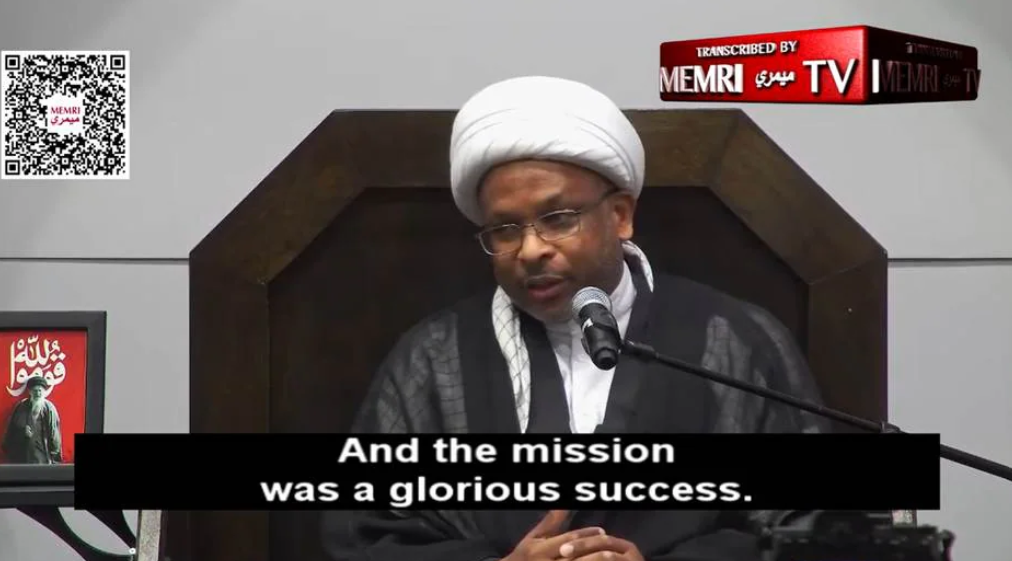
On October 2, the Middle East Media Research Institute (MEMRI) documented one such figure, Dearborn, Michigan-based Imam Usama Abdulghani, who boasted from the pulpit that October 7 was a “glorious success.” He lionized Hamas’s “daring group of commandos” and their “storming” of “Zionist strongholds,” lamenting that “the West” saved Israel from ostensibly imminent collapse.
Abdulghani has a history of extremist rhetoric, particularly advocacy for the Iranian regime and its Lebanon-based terrorist proxy Hezbollah. Some examples include:
- On September 25, Abdulghani spoke at an event memorializing Hassan Nasrallah, the deceased longtime leader of Hezbollah, responsible for the murders of scores of American, Israeli, and other troops and civilians.
- On April 11, 2026, the imam warmly eulogized the now-deceased leader of the Iranian regime Ali Khamenei, lauding his “martyrdom” and expressing a yearning for the same “ultimate honor.”
- Abdulghani similarly praised Khamenei and Nasrallah during late June of this year, telling listeners that “we have a role to play” to prevent Khamenei’s assassination.
Abdulghani has also propagated 9/11-related conspiracy theories. On September 11 of this year, he claimed, “we all know, 9/11 was a big lie … They made it up. It was all a big lie,” before citing religious justifications for dismissing news from supposedly unreliable people.
The Dearborn imam’s words reflect a wider trend. According to a March 2024 Pew Research Center survey:
While few people in any religious group describe Hamas’ Oct. 7 attack as acceptable, the share of Muslims (21%) who express this view is higher than the share of Americans in other religious groups who say the same (roughly 5% or fewer, including 3% among Jewish Americans). Among U.S. Muslims, 10% say the way Hamas carried out the attack was completely acceptable; 11% say it was somewhat acceptable.
A Pew poll from July 2026 regarding American attitudes toward Hamas showed a still more striking disparity among U.S. religious groups. The percentage of Muslim American adults with a “favorable view of” Hamas was 44%, while Evangelical, Catholic and Jewish American adults were all in single digits. Religiously unaffiliated American adults were at 11% and black Protestant American adults at 17%.
Such data seemingly point to a troubling trend. Extrapolating from the July 2026 poll and an American Muslim adult population of approximately 2.7 million, it would seem almost 1.2 million in the religious group hold such positive views of Hamas. Obviously, individuals are influenced in many ways, including via social media as well as the legacy media, that have tilted sharply against Israel, including by whitewashing the role of Hamas in ongoing conflict and violence.
All the more critical is the role of communal religious leaders to discourage and denounce extremism, not fan the flames of falsehood and enmity.