
For decades, Israel has lived with a social bargain that was never meant to become permanent.
At the country’s founding, a few hundred ultra-Orthodox yeshiva students were allowed to defer military service so that the shattered world of Torah scholarship, nearly destroyed in the Holocaust, could be rebuilt. What began as an exception for roughly 400 students gradually became a mass arrangement covering an entire sector of society.
Today, that arrangement is reaching its limits.
Israel’s ultra-Orthodox population, known as the Haredim, has grown dramatically. Haredim now account for close to one-fifth of Israel’s Jewish population, and demographic projections suggest that their share will continue to rise rapidly in the coming decades. At the same time, the community remains significantly underrepresented in both military service and the labor force.
That combination has turned a long-running social tension into one of Israel’s most explosive political problems.
The issue has become even more acute after years of war. Nearly 800 Israeli soldiers have been killed, tens of thousands have been wounded, and the Israel Defense Forces face serious manpower shortages. Reservists have been called up for repeated, lengthy deployments. Families across the country have paid an enormous human and economic price.
Against that backdrop, the refusal of large numbers of Haredi men to serve has become much harder for the rest of Israeli society to accept.
But military service is only part of the problem.
The deeper issue is that large parts of Haredi society have developed as a semi-separate social system. Many Haredi men spend years in full-time religious study rather than entering the workforce. Many Haredi schools for boys provide little or no instruction in core subjects such as mathematics, English, science and civics, leaving graduates poorly equipped for a modern economy.
The result is a community marked by high levels of poverty, heavy reliance on state support and unusually low rates of male labor-force participation.
At the same time, Haredi families are much larger than the Israeli average. Official demographic data show a striking fertility gap between Haredi and non-Haredi Jewish women. That means the consequences of today’s policies will be multiplied in the next generation.
This is why the issue can no longer be treated as a narrow dispute over military exemptions. It is a question about Israel’s economic future, social cohesion and basic civic contract.
How did Israel get here?
The story begins with David Ben-Gurion.
In the state’s early years, Haredi leaders approached Israel’s first prime minister and argued that drafting the remaining yeshiva students would destroy the remnants of the great European Torah academies that had survived the Holocaust. Ben-Gurion agreed to defer the service of roughly 400 students as long as they remained in full-time religious study.
The logic was understandable at the time: preserve a tiny remnant of a civilization that had almost been annihilated.
But as the exemption expanded from hundreds to thousands and eventually to tens of thousands, the original justification changed beyond recognition. Ben-Gurion himself later expressed misgivings about what the policy had become.
A limited historical exception had evolved into a social model.
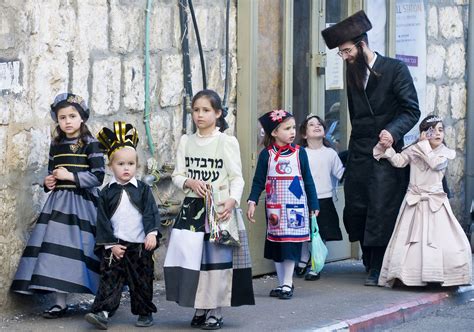
Over the decades, Haredi society became increasingly insular. Its communities developed their own schools, media, political parties, rabbinic leadership and social norms, often with limited interaction with mainstream Israeli institutions.
This separation was sustained not only by religious conviction, but also by politics.
Israel’s parliamentary system has given small parties enormous leverage. For much of the country’s history, the Haredi parties have held the balance of power between larger political blocs. Their support could determine who became prime minister and which coalition could survive.
That made them classic kingmakers.
At different points, they aligned with the left and later with the right, trading political support for protection of their educational system, budgets, welfare arrangements and military exemptions.
One famous line attributed to former education minister Shulamit Aloni, a secular icon of the Israeli left, captured the logic perfectly: “For peace, I’m willing to wear a shtreimel.”
In other words: if Haredi support was necessary to advance the left’s highest political priority, ideological differences could be set aside.
Years later, Benny Gantz offered an equally revealing metaphor. In the 2019 election campaign, he told Haredi leaders that he would send them a blank sheet of paper signed “Benny Gantz” at the bottom and allow them to fill in two-thirds of the page.
The message was unmistakable: Haredi political support was extraordinarily valuable, and Israel’s major parties were prepared to pay for it.
That remains true even today.
Despite the increasingly aggressive rhetoric surrounding Haredi enlistment, the political establishment is still reluctant to impose full military service on the entire community.
Gadi Eisenkot, former IDF chief of staff and now a major opposition figure, has made clear that he supports preserving exemptions for a limited number of serious Torah scholars. Yair Golan, another leading opposition figure and former general, has argued that it would be neither practical nor desirable to draft all Haredim into the IDF immediately.
This matters because it reveals something important: there is no real political consensus in Israel for simply drafting every Haredi male by force.
The disagreement is not over whether change is necessary. It is over how that change should happen.
One camp, represented most prominently by politicians such as Yair Lapid and Avigdor Liberman, favors a confrontational approach: sharply curtail exemptions, impose financial penalties, arrest draft evaders and use state power to force Haredi society into compliance.
The other camp, associated with Benjamin Netanyahu and the Likud, favors a gradual approach based on negotiated enlistment targets, incentives, sanctions and long-term integration.
The difference is fundamental.
One approach seeks a dramatic break with the old system. The other seeks to change the system without triggering a full-scale cultural war.
There are good reasons to believe that gradual change may now be possible.
Haredi society itself is undergoing a profound internal transformation.
Its younger generation is increasingly dissatisfied with poverty and economic dependence. The authority of the great rabbinic leaders of previous generations has weakened. Smartphones and the internet have penetrated even communities that officially reject them, exposing young Haredim to the wider world and to new expectations regarding careers, education and personal autonomy.
The walls are no longer as high as they once were.
At the same time, external pressure has never been greater.
Religious Zionist Israelis, who have suffered disproportionately high casualties in the current war, are increasingly angry at the Haredi refusal to serve. Secular Israelis are equally frustrated. Even Israelis who once tolerated the old arrangement increasingly regard it as unsustainable.
The Haredi leadership therefore faces pressure from both directions: from within its own society and from the Israeli majority outside it.
That combination may finally be producing movement.
The emerging military-service framework, which sets enlistment targets that could eventually reach roughly half of each Haredi age cohort, represents a major shift. Until recently, Haredi leaders often resisted not only the enlistment of yeshiva students, but even the enlistment of young men who were not seriously studying.
That position is becoming harder to maintain.
If the community accepts, even reluctantly, that young men who are not genuinely engaged in full-time Torah study should serve, that would represent a historic change.
There are cultural signs of change as well.
In earlier election campaigns, the Haredi Shas party often portrayed the ideal family as one whose sons studied Torah while expressing love and admiration for Israeli soldiers from afar.
In recent campaign material, however, a different image appears: one brother studies in yeshiva while another serves in the military. Both are presented as legitimate, respected sons of the same Haredi family.
That may seem like a small symbolic change. In Israeli society, it is not.
The long-term solution should not be based primarily on punishment.
Israel should instead build a new civic contract around contribution.
Those who serve the country more should receive more from the country.
Combat soldiers and reservists who spend months of their lives defending Israel should receive substantial advantages in housing, taxation, education and public benefits. Those who serve less should receive less. Those who choose not to serve at all should not enjoy the same economic benefits as those who bear the burden.
Such a system would apply not only to Haredim, but to Israeli society as a whole.
It would replace the sterile argument over collective punishment with a simple principle of civic reciprocity: contribution should matter.
Israel cannot sustain a future in which a rapidly growing share of its population is largely absent from both national defense and the productive economy.
But neither can it afford a domestic cultural war against a community that will soon constitute an even larger share of the country.
The only viable path is integration without cultural annihilation: preserving serious Torah scholarship while ending mass exemption, expanding Haredi participation in the workforce, strengthening schools that teach both religious and core subjects, and rewarding those who carry the national burden.
For the first time in many years, that outcome may actually be within reach.