
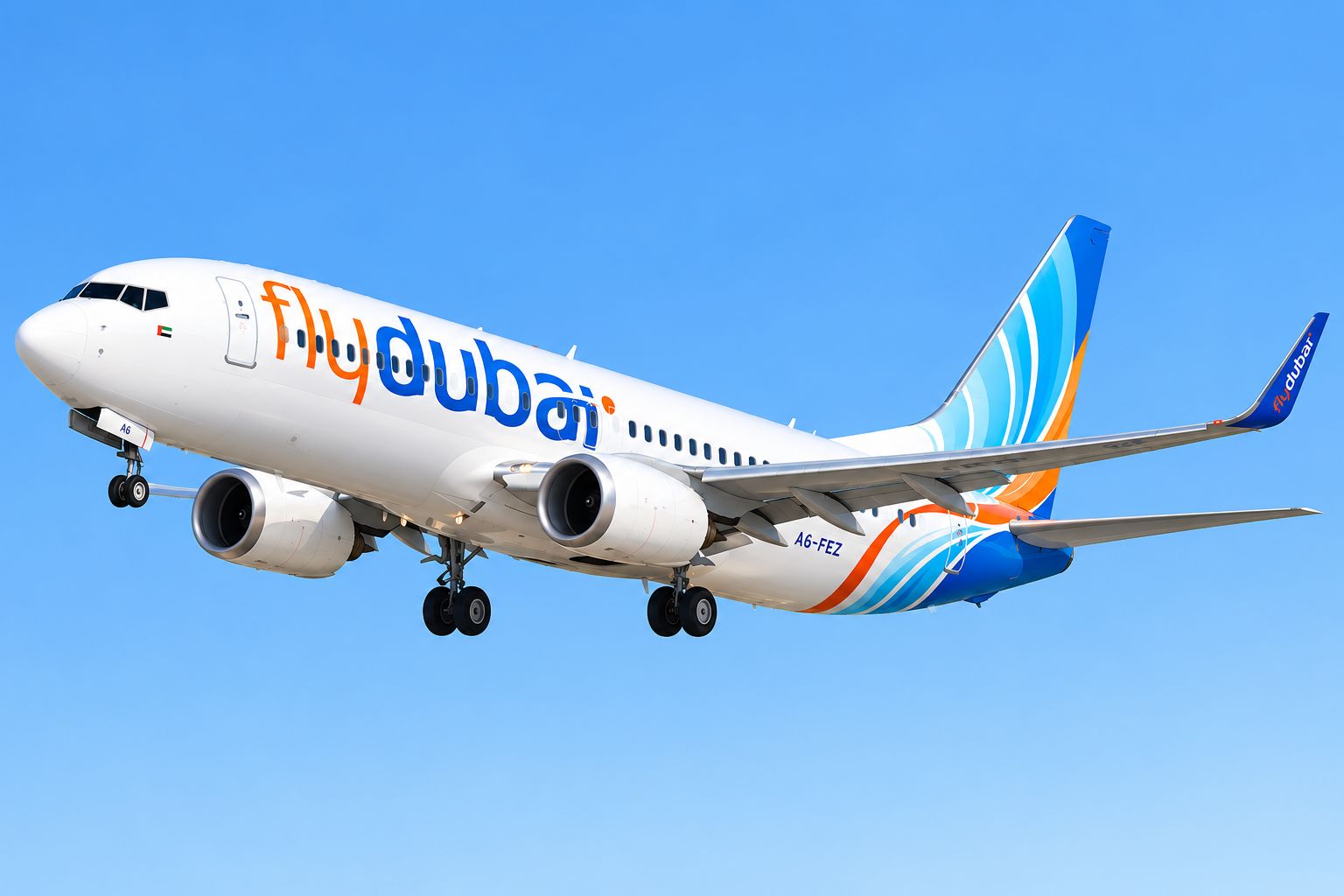

Jews around the world celebrated what many believe was a Sukkot miracle after Israeli passengers aboard a Flydubai flight from Dubai to Tel Aviv prevented a catastrophe. After the flight’s co-pilot stabbed the captain, the aircraft carrying 174 passengers was sent plunging thousands of feet. Passengers who forced their way into the cockpit found the co-pilot attacking controls and overpowered him, while two off-duty pilots aboard the flight helped bring the aircraft safely into Tabuk, Saudi Arabia.
With the flight headed for Tel Aviv and with the passengers predominantly Israelis, the possibility that Israelis were being deliberately targeted became an obvious focus of investigation. Within a short time, Israeli security officials were reporting that the Omani co-pilot had deliberately tried to crash the Israel-bound flight. Defense Minister Israel Katz later called it a “jihadist terrorist attack attempt” and said the attacker intended to bring down the plane with everyone aboard. Israel’s Foreign Ministry described it as an attempted terrorist attack against Israelis, the UAE and the Abraham Accords.
Eyewitness testimony reinforced the attempted-crash account. Israeli passenger Yaniv Hayun described seeing the co-pilot trying to destroy the aircraft’s controls after stabbing the captain. Despite being badly wounded, Captain Smit Machchhar fought back and managed to unlock the cockpit door, allowing passengers to enter. He is being hailed as a hero.
Passengers Yaniv Hayun, Tzvika Manes and Assaf Rajwan were among tthose who fought the attacker and helped subdue him. Hayun seized the controls himself and pulled back on them as the plane continued its steep dive. He recounted that he knew what to do from watching the television series Mayday: Air Crash Investigation. Off-duty pilots took over. Rajwan later said the passengers realized it was “to be or not to be” and decided to fight for their lives, while Manes described joining the struggle after first pulling his young daughter away from danger. As the plane was brought to safety, Israeli passengers broke into Jewish songs of thanks to God, and chants of “Am Yisrael Chai” (the nation of Israel lives).
Much of the initial Western coverage reflected a familiar reflex when Israelis come under attack, minimizing the nature of the violence until it becomes impossible to ignore. The New York Times first characterized the crisis as the pilot and co-pilot having “gotten into a fight.” CNN called it an “altercation” between pilots, even while reporting that the aircraft had plunged more than 17,000 feet and transmitted an emergency signal. UPI led with “Physical altercation in cockpit”, the Guardian described a “feud” between the pilots, and the Washington Post called it an “onboard altercation”. Within hours, those descriptions were overtaken by eyewitness accounts of what had actually happened. Reuters subsequently led its updated account with passengers and crew having foiled a bid to crash the Tel Aviv-bound aircraft, while the Washington Post changed its headline to “Pilot on Tel Aviv-bound flight tried to crash plane after cockpit stabbing, Netanyahu says,” continuing to frame the attempted crash as Netanyahu’s account rather than as apparent fact.
The incident quickly generated another familiar pattern. Within 67 minutes of the first distress signal, antisemitic “false flag” claims were already circulating online. In a 12-hour monitoring period, the Combat Antisemitism Movement’s Antisemitism Research Center identified 2,963 conspiracy posts blaming Israel, Prime Minister Benjamin Netanyahu, the Mossad, Zionists or Jews for the attempted hijacking. Those posts accounted for 72% of the 4,136 “false flag” posts ARC tracked, rising to 82% in the final hour, with the volume peaking at roughly 10 posts per minute.
“Physical altercation in cockpit forces FlyDubai flight to divert,” UPI, September 30, 2026
Original Washington Post version, “onboard altercation,” September 30, 2026
Original New York Times version, “gotten into a fight,” September 30, 2026